
How your tongue sits inside your mouth probably isn’t a thought that keeps you up at night, but it is an important function that myofunctional therapy addresses. How you swallow, whether you breathe through your nose or mouth, and how your jaw muscles work together are everyday functions that rarely come to mind but good oral health depends on these functions working properly. Through targeted exercises, myofunctional therapy focuses on retraining automatic muscle patterns rather than treating teeth alone.
But who actually needs it? We’ll explore how myofunctional therapy works, what orofacial myofunctional disorders are, who may benefit, and how it can complement orthodontic treatment and other professional care.
In this post we will cover…
- Signs of an orofacial muscle-function problem
- Conditions myofunctional exercises may support
- How oral and facial muscle retraining works
- How therapy can work alongside orthodontics
- Whether myofunctional therapy can help with TMJ concerns
Myofunctional Therapy Retrains How Your Mouth and Facial Muscles Work
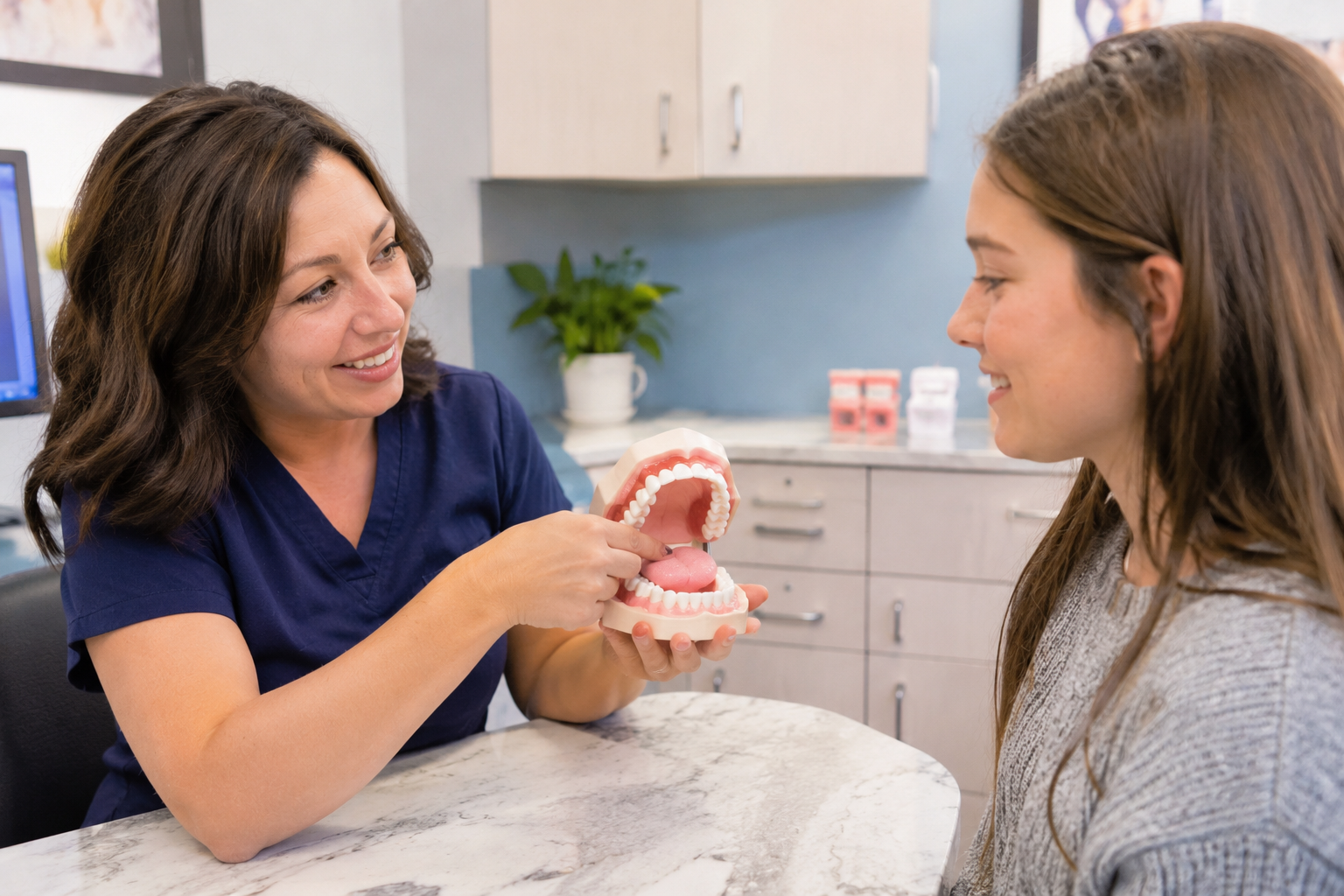
Myofunctional therapy is a structured form of therapy that uses targeted exercises to improve the strength, coordination, awareness, and resting position of muscles in the mouth and face. Trained professionals evaluate patterns involving your tongue, lips, jaw, breathing, chewing, swallowing and oral posture, then develop exercises tailored to your needs. The goal goes beyond simply strengthening muscles. Therapy retrains how muscles rest and move during these types of oral activities.
If you’ve wondered what is orofacial myofunctional therapy, it’s simply another term for myofunctional orofacial therapy, which focuses on developing healthier oral muscle habits.
What Are Orofacial Myofunctional Disorders?
Orofacial myofunctional disorders are when patterns of muscle movement and resting oral postures begin to function abnormally. These habits involve muscles surrounding the tongue, lips, jaw, and face. Problematic orofacial structures can affect breathing, chewing, swallowing, speaking, or resting posture. Examples include tongue thrust, open-mouth posture, chronic mouth breathing, improper tongue resting position, and other problematic muscle patterns surrounding the jaw.
Symptoms may overlap with dental, orthodontic, speech, or airway concerns. This is why, rather than self-diagnosing, a professional evaluation is important to identify underlying causes.
What Conditions May Myofunctional Therapy Help Support?
Myofunctional therapy may help address several disorders. Some common myofunctional disorders include:
- Tongue Thrust – Often affecting children, the tongue presses in between teeth or against them. It interferes with swallowing, teeth development, and speech function.
- Open-Mouth Posture – In a resting state or while asleep, a person’s lips remain slightly open, rather than forming a light seal. In addition, the tongue can end up resting on the floor of the mouth versus being slightly suctioned to the roof of the mouth.
- Chronic Mouth Breathing – Habitually inhaling and exhaling through the mouth versus the nose. This can lead to sleep disorders and ill health. Occasional mouth breathing due to illness is normal.
- Teeth grinding or clenching (bruxism) – When teeth are pressed tightly together and rubbed back and forth, teeth can be worn down, causing jaw, neck, and head aches.
- Problematic Muscle Patterns Around The Jaw – Myofunctional therapy TMJ (temporomandibular joints) disorders can lead to chronic pain, chewing troubles, and more. This can result from teeth grinding, physical trauma, arthritis, and more.
- Obstructive Sleep Apnea – A form of disordered breathing during sleep caused by soft neck and head tissues putting pressure on the windpipe, preventing enough air being breathed in. This can potentially disrupt sleep habits and possibly lead to more serious complications. Myofunctional therapy may be used as part of a broader treatment plan, but obstructive sleep apnea requires medical diagnosis and management.
Because every patient’s needs are different, the end goal is having exercises and treatment tailored to the individual’s concerns and not using a cookie-cutter approach.
What Happens During Myofunctional Treatment?
Myofunctional treatment typically begins with an evaluation of tongue movement, oral posture, breathing, swallowing, and related muscle patterns. Upon diagnosis, a personalized series of exercises is developed to retrain involved areas, like tongue, lips, cheeks, breathing, or other oral movements. Your therapist may share exercises to do at home to reinforce new habits. Consistency matters because therapy is intended to establish new muscle patterns over time rather than create a one-time mechanical change.
How Can Myofunctional Therapy Support Orthodontic Treatment?
While orthodontic treatment focuses on aligning teeth and correcting certain jaw relationships, myofunctional therapy addresses the muscle habits that influence oral function. Improving tongue posture, swallowing patterns, and other oral habits may help support orthodontic results when those functional patterns are relevant to the patient’s needs.
At Miles of Smiles, myofunctional therapy may be combined with orthodontic treatment to support treatment and help address muscle patterns that could contribute to regression.
Can Myofunctional Therapy Help With TMJ Problems?
When exploring myofunctional therapy TMJ treatment options, therapy may be considered for some patients with symptoms involving muscle tension, clenching, oral posture, or dysfunctional movement patterns; although, TMJ disorders have many possible causes. There are multiple treatments that can be considered for TMJ: muscle retraining, orthodontic treatment, an appliance, physical therapy, medical care, or a combination of treatments. A professional evaluation is your best bet to help determine the treatment approach that makes the most sense to treat TMJ effectively.
Find Out Whether Myofunctional Therapy Fits Your Needs
Myofunctional therapy helps retrain oral and facial muscle patterns involved in everyday activities like breathing, swallowing, chewing, and jaw movement. Because everyone’s needs are different, individualized treatment is necessary. The first step is a professional evaluation to identify current muscle or functional patterns, then determining whether myofunctional therapy is the best avenue for your treatment plan.
Miles of Smiles proudly serves families in Temecula, Hemet, and surrounding communities, including Redhawk, Harveston, French Valley, East Hemet, and San Jacinto. If you’re concerned about your own or your child’s oral muscle habits, schedule a consultation with our team to explore whether myofunctional therapy may be right for you.